our organs – the physical level
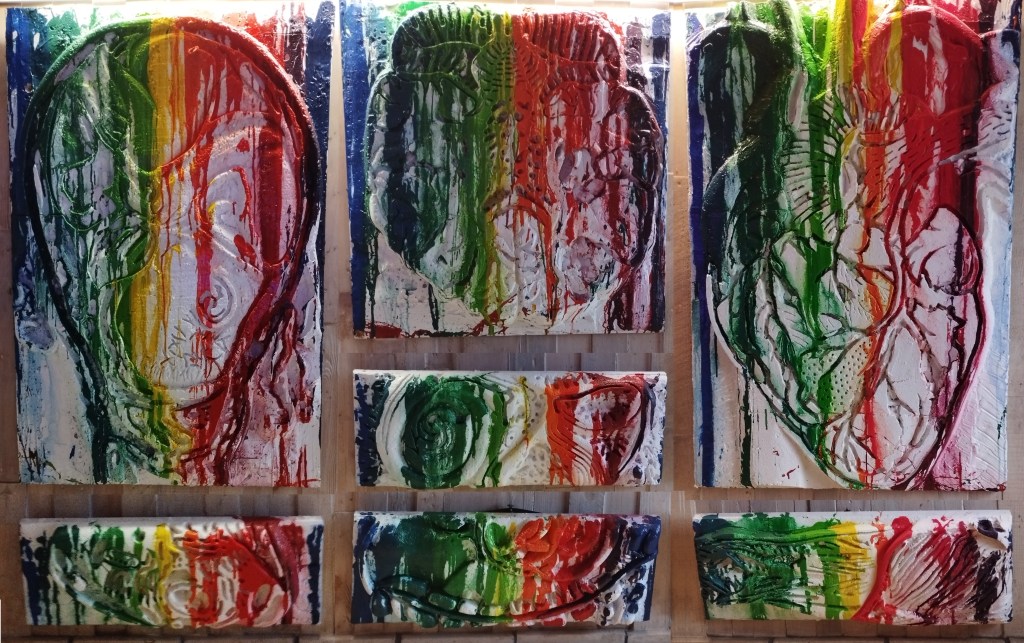
(they represent the 7 virtues of our species from left to right)
The Embryo (Caritas – Love) The uterus is an essential organ for human reproduction and the continued existence of our species. It is the space in which fertilized egg cells implant themselves in order to allow an embryo to mature under the protection of this shell. It is the only organ that can create a new organ – the placenta.
The Brain (Prudentia – Prudence) With around 10 billion nerve cells, the brain is the command center of our organism. This multifunctional biological computer regulates our entire perception, behavior, metabolism and important functions of our organs. This means that our creativity and the potential of our consciousness are also embedded in our brain.
The heart (Fides – Faith) Responsible for supplying the organs, the heart is the central engine of our body, which ensures our vital supply with its constant pumping movements. In many cultures and religions it is also viewed as the seat of our soul and connection to the divine. Furthermore, the heart is often associated with our emotions, especially love.
The organ of balance (Justitia – justice) Without this small organ it would not be possible for us to move upright in balance. It always collects information about the position and movement of our head and supplements it with visual and proprioceptive signals. The movements of the fluid activate receptors that transmit corresponding signals to the brain.
The cell (Spes – hope) There are up to 36 trillion cells in our organism. In grains of sand, this is about 15 cubic meters of space. So about 42 sandboxes for your own garden. In addition to the incredible quantity, our cells have fabulous properties: renewal and reproduction. They therefore form the basis of our physical existence. They are the true architects of living things and plants. They have been developing for around 4 million years and are constantly adapting to the changes on our planet.
The liver (Temperantia – moderation) As the most important metabolic organ, the liver regulates the utilization of ingested food components as well as the breakdown and excretion of unusable substances. In this respect, it can be viewed as the detoxification center in the body. Vital proteins are also produced in the liver.
The Muscles (Fortitude) With their ability to contract and relax, the muscles regulate our entire musculoskeletal system and our physical strength. Our muscles are the power plant of our body. They only convert around 25% of energy into strength, the rest is used to maintain our body temperature.
Large 100cm x 80cm x 10cm, Medium 80cm x 80cm x 10cm, Small 40cm x 80cm x 10cm
THE EYE
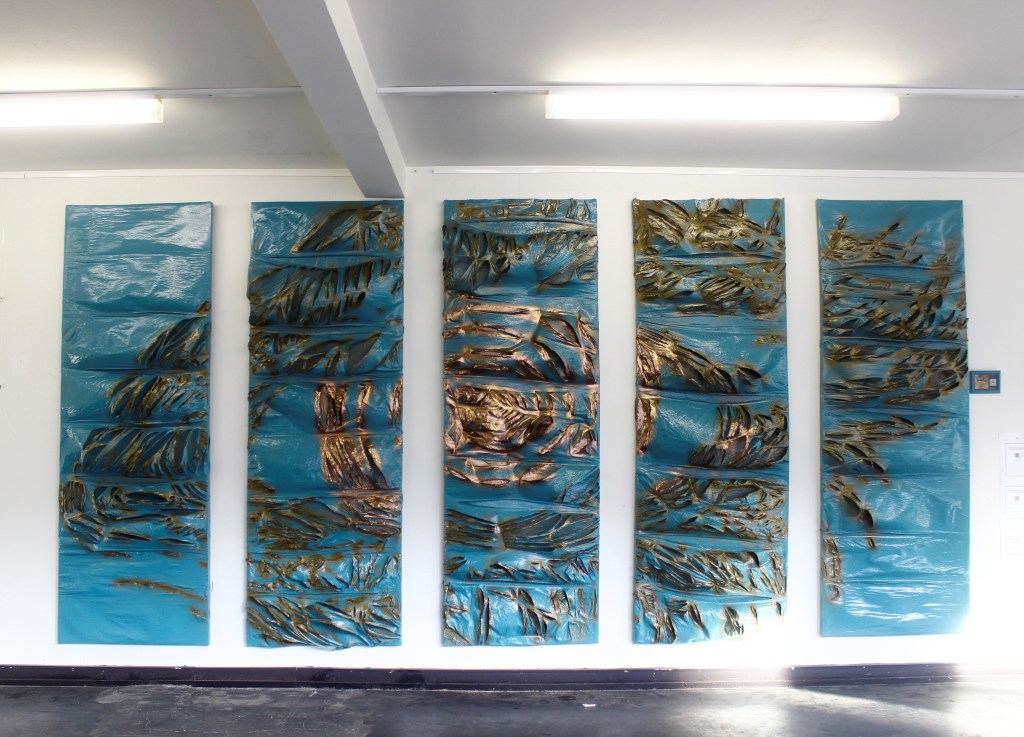
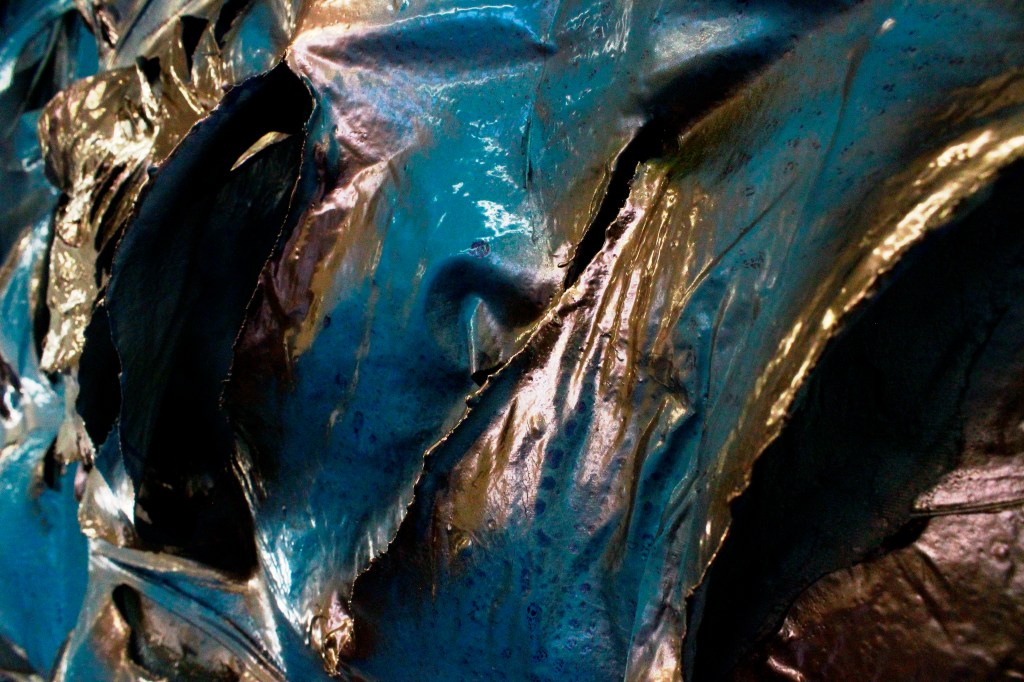
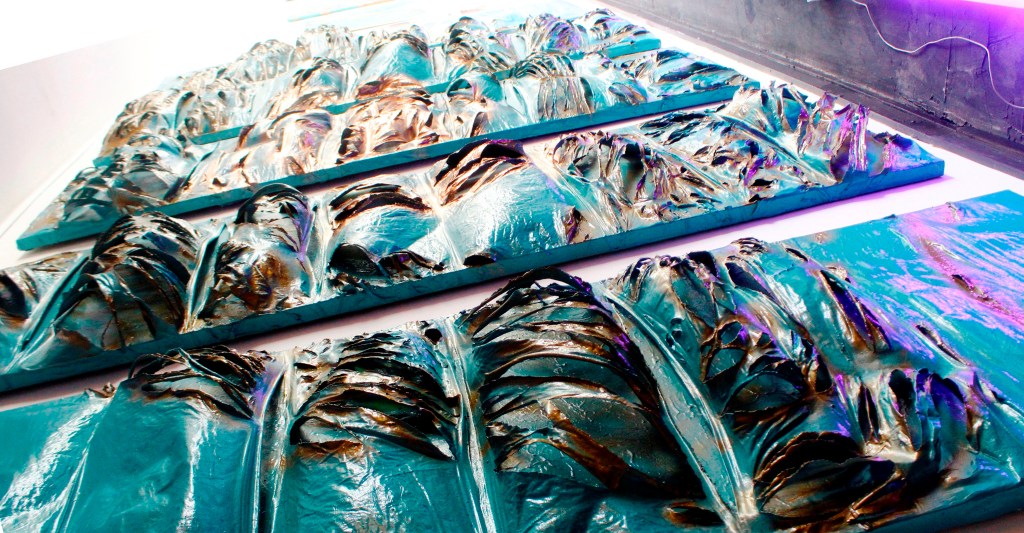
As part of our five senses, the eye is a central medium of our consciousness, which enables us to perform a unique function of our perception: seeing. As an essential link to what surrounds us, the eye has already been given a special meaning in many religions and mythologies for the omnipresence of the divine. In the Western world we know the eye in a triangle as a symbol of the divine Trinity in Judeo-Christian mythology – which also adorns the back of the United States of America one dollar bill. In the mythology of ancient Egypt, the Middle East and Judaism, the eye appears as a protective symbol in the form of the Eye of Horus or the Eye of Fatima. In Buddhism and Hinduism, however, the popular representation of a third eye represents a spiritual view of the world that is hidden from normal sense organs.
Seen from a visionary perspective, this image shows the oversized abstraction of an eye. The direct confrontation with the work aims to create a feeling of awe at the omnipresence of a seeing entity and the awareness of what we do not see. Because what we perceive with our two organic eyes is only an interpretation of our mind based on the transmission of electrical impulses to our brain. However, the appeal of this work is directed towards a more far-sighted vision based on wisdom and intuition. Far from all religious approaches, the work hides an impulse towards precisely this “seeing”, i.e. hearing our inner voice.
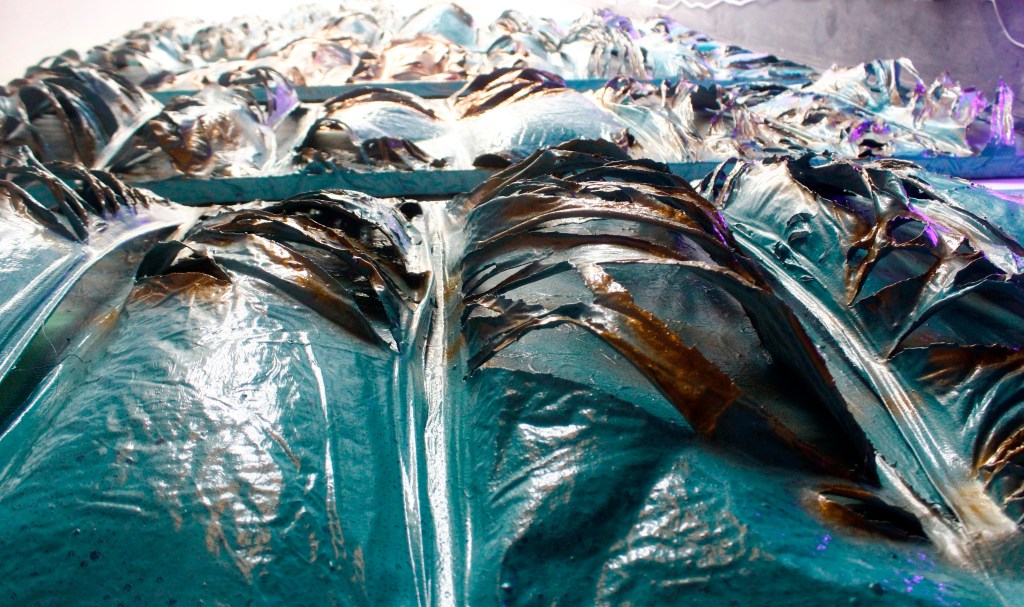
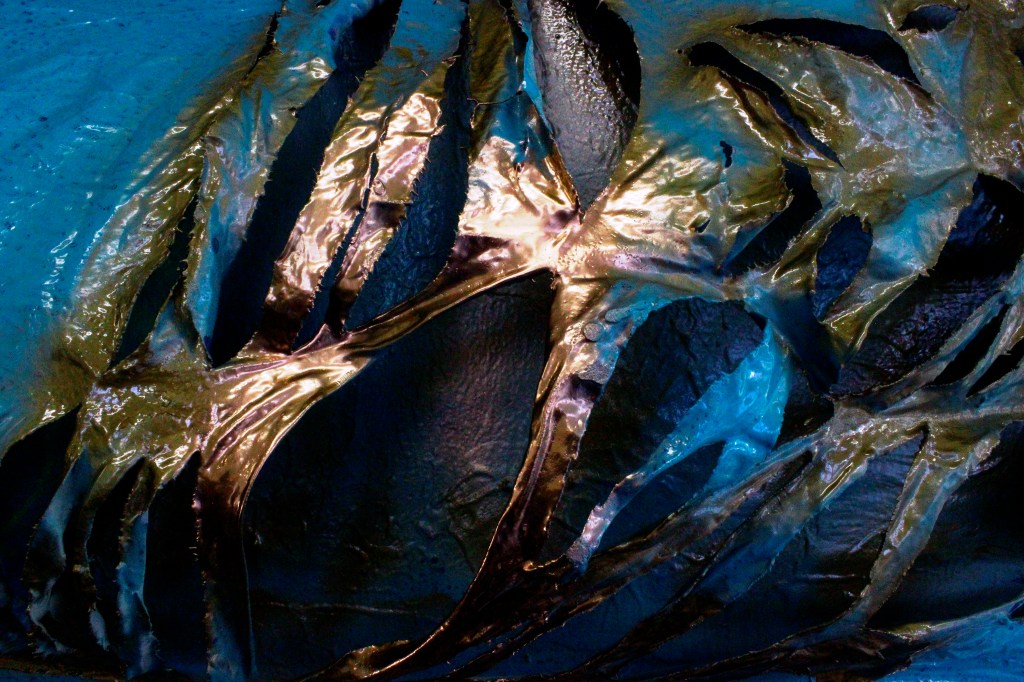
From a rational point of view, this may seem nonsensical – but if we look at the currently increasingly noticeable climate change and the lack of intervening measures, we see that the rationale of saving our planet from decline has not yet been enough. We are facing a global disaster and I see the only possibility of correcting our actions in the intuitive behavior of every single person.
Intuition can arise without external influence. In order to see things completely clearly, one needs the desire and willingness for personal development, and a broader “seeing” and recognition. In developing the work, I used this approach to push the limits of my own options in order to achieve both the size and the structural properties with strong concave and convex curvatures. Linen on a frame construction in silicate paint. Subsequent application of enamel varnish and color accents in epoxy resin varnish.
H: 250 cm – W: 500 cm – D: 32 cm
Lotus
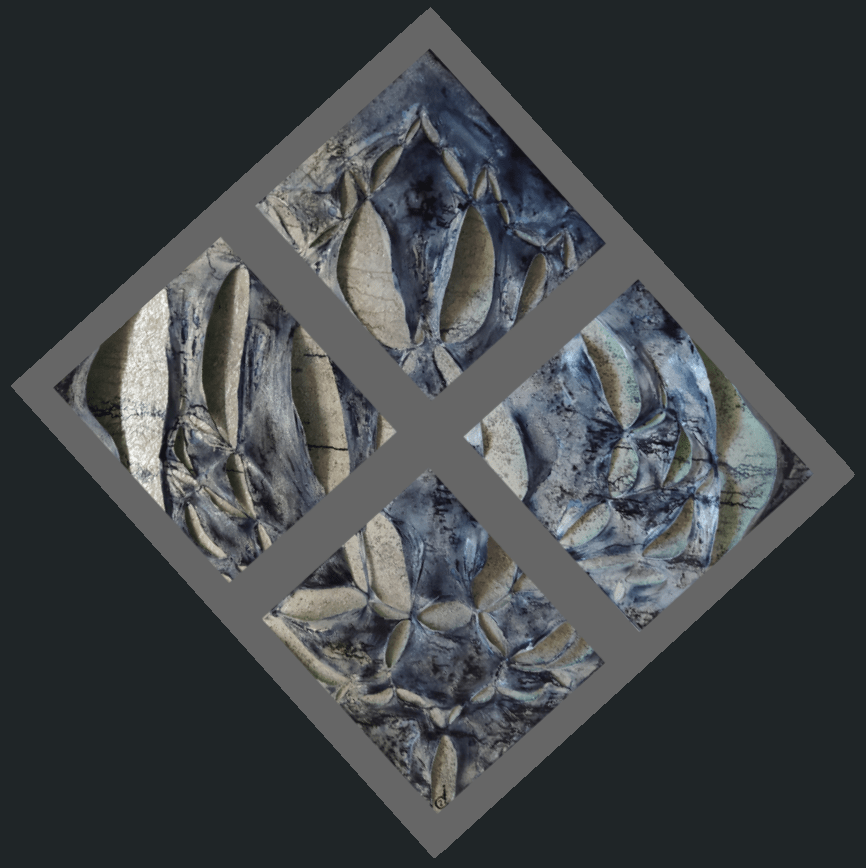
The lotus, a sacred flower, is a symbol of purity of heart, loyalty, creativity and enlightenment. This work of art is the abstraction of just such a flower. At the beginning I asked myself the question: What does such a plant look like from the inside, so my desire was to create a picture from the perspective of a plant with a real consciousness that we know. I chose a diamond format as the format for arranging the four-part picture. The peculiarity of the lotus flower is that it actually thrives in swampy, dark conditions, and yet is a symbol of spiritual purity and clarity. Just as the lotus is elevated above its adverse origins, its spirituality is also elevated above the material values that the diamond represents.
Acrylic and alkyd resin varnish in linen with glaze and craquelure varnish as a finish.
H: 105 cm – W: 110 cm – D: 12 cm
Zirkus
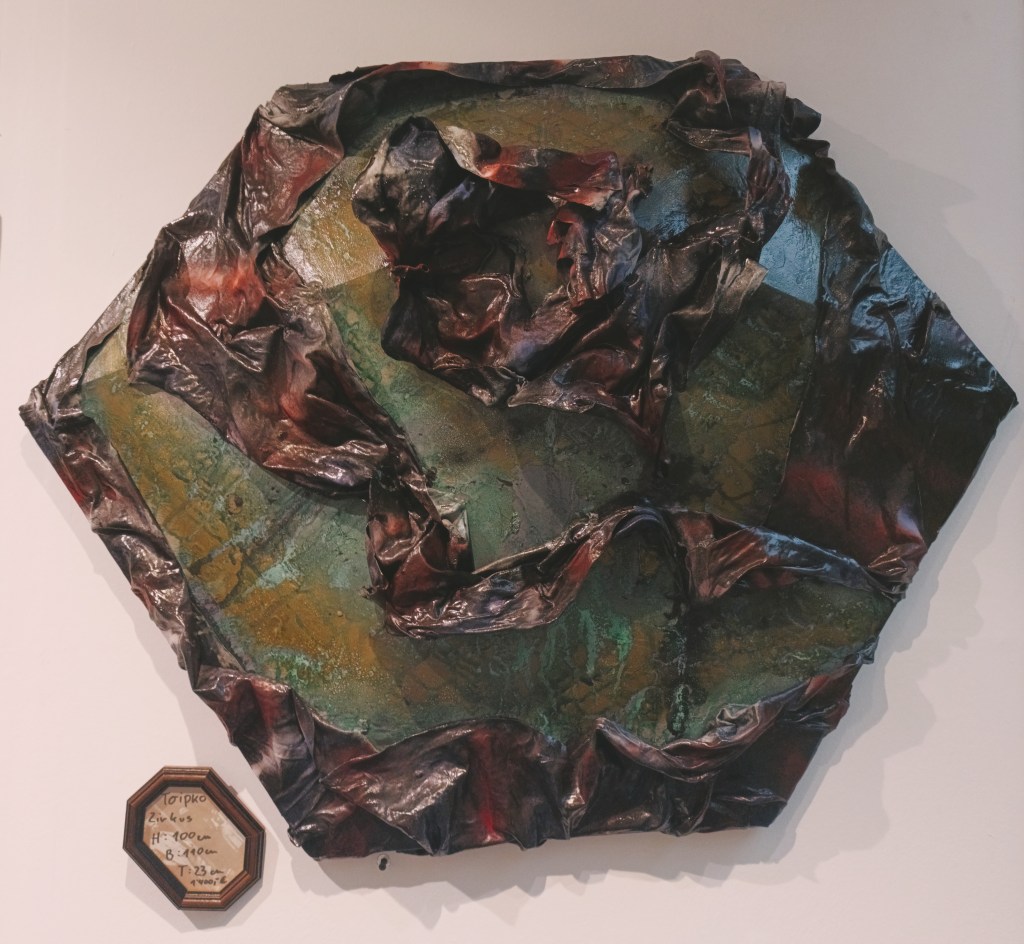
The basis for this work is the profound world of a circus. So the perfectly perfidious presentation of a facade. The upper class has a dark blue-white-red combination and its color scheme shows that upper society that craves amusement. In the lower layer there are green-yellow-brown areas. These look like oxidized copper. The coin metal described is intended to illustrate the arduous work and the hard-earned wages. The principle of the circus can be tailored to our society today.
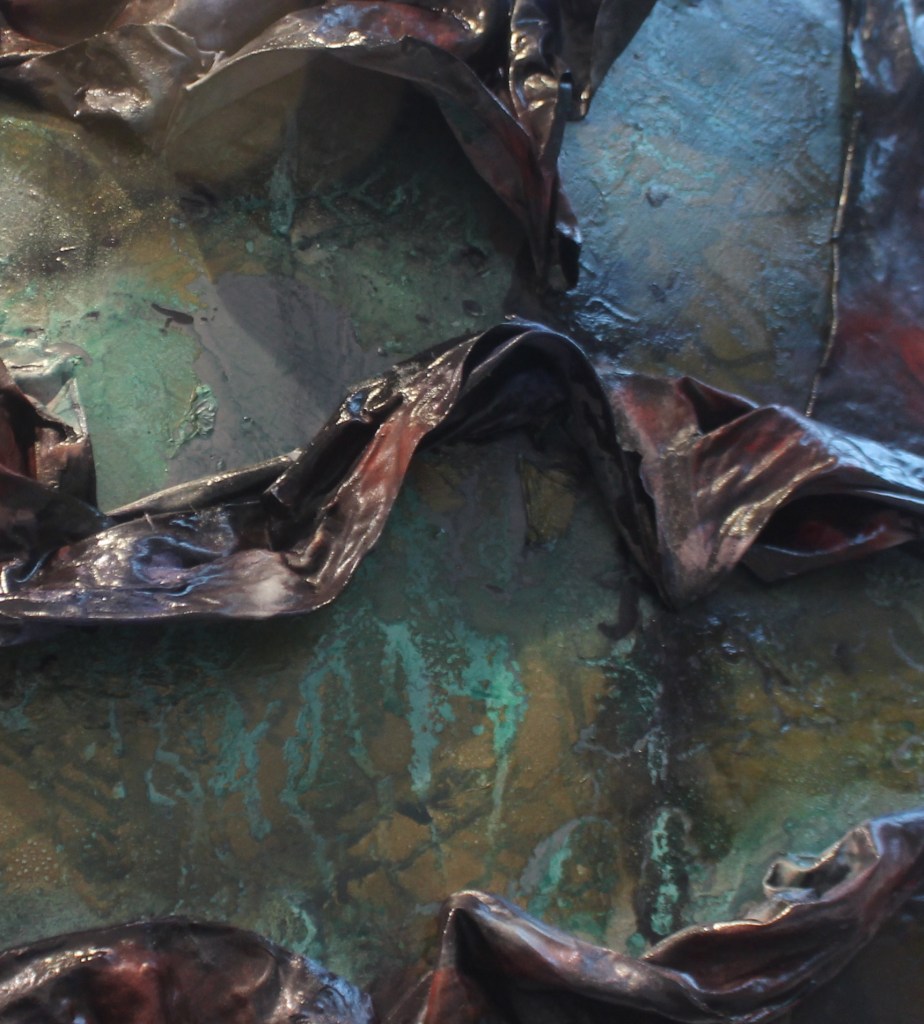
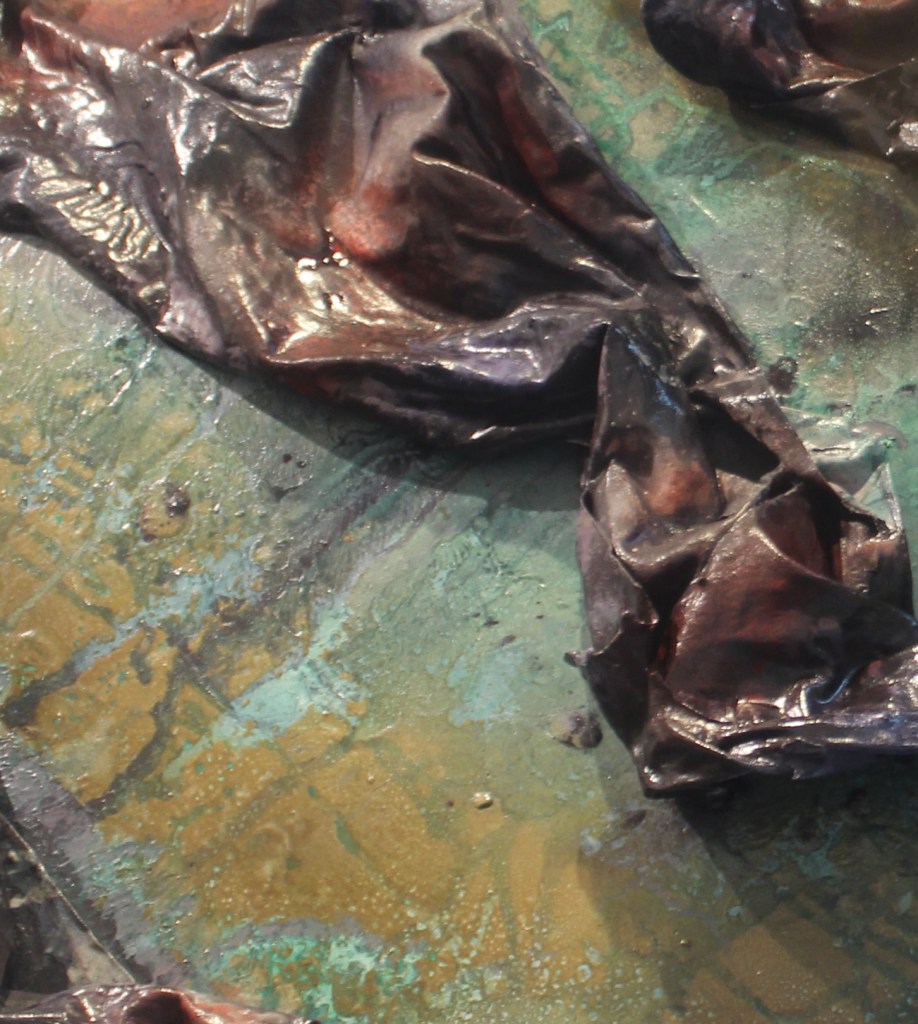
Epoxy resin, acrylic and emulsion paint on linen over a hexagonal wooden frame.
W: 100 cm – H: 110 cm – D: 23 cm
Reason
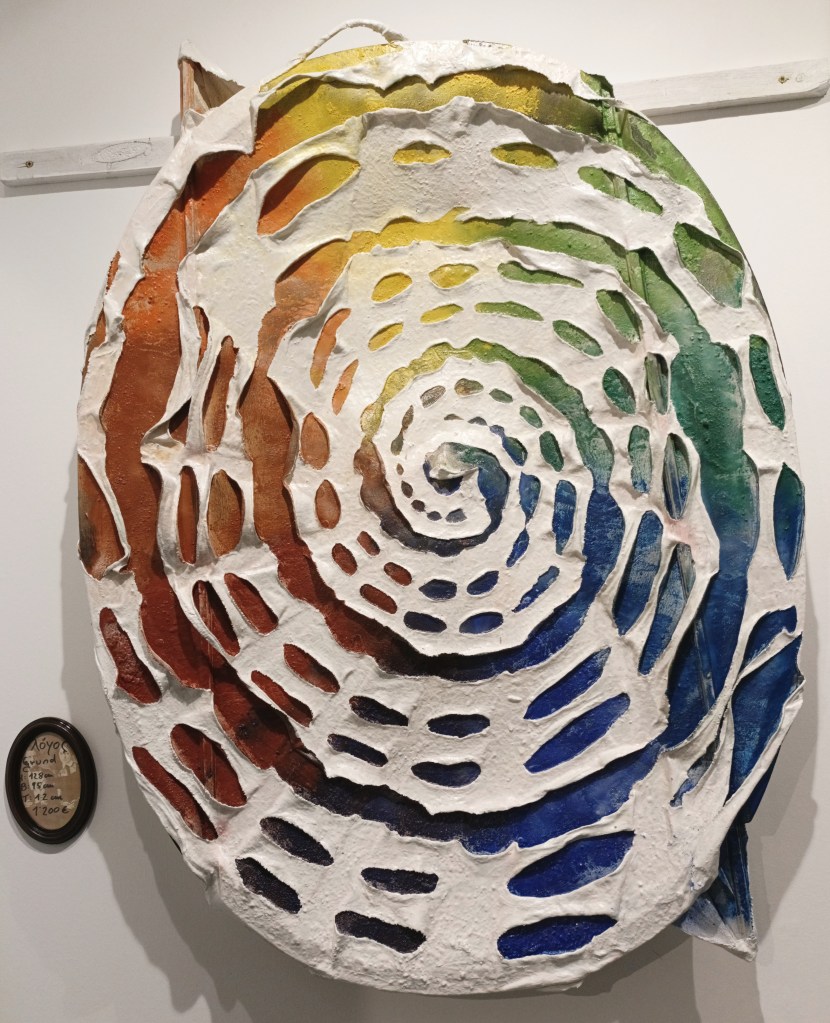
We are all always looking for reasons, on the one hand we are looking to understand, to accept, to let go or to process. On the other hand, we use reasons to justify ourselves, to be wasteful or to avoid our conscience. The reason for something determines our daily actions. In this context, the reason is the deepest point in everyone. As the innermost center of a mind. The rainbow points to the complexity of the reasons we like to create. The wise spiral shows the long path to our lowest point. Everyone has the ability to control their consciousness, but very few use this ability. In this work I clarify this topic. The two corners stand out slightly in the image and represent the belief in the illusion of control.
sealed pigment powder, acrylic and epoxy resin on linen
H: 128 cm – W: 95 cm – D: 12 cm
Octopus
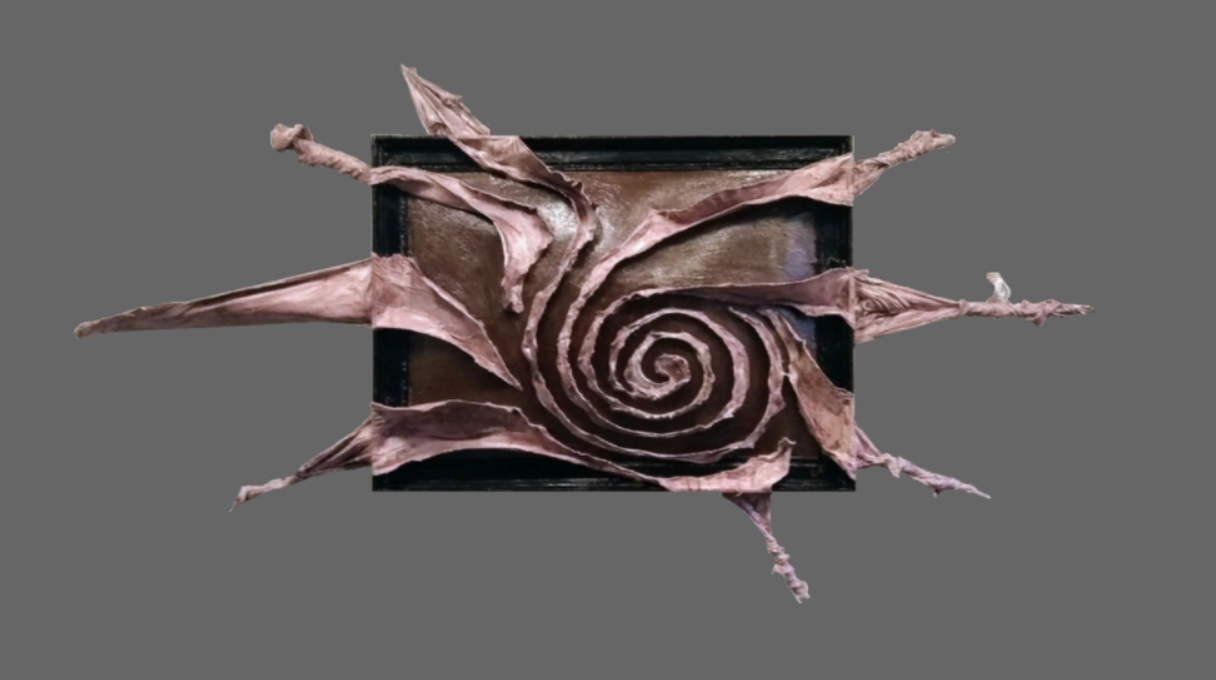
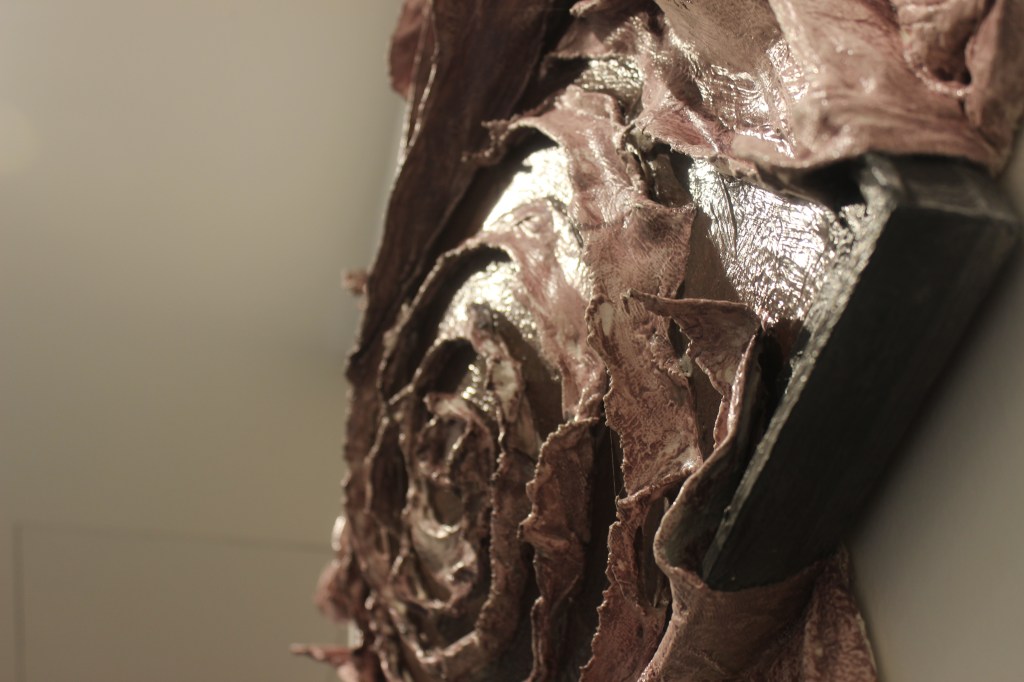
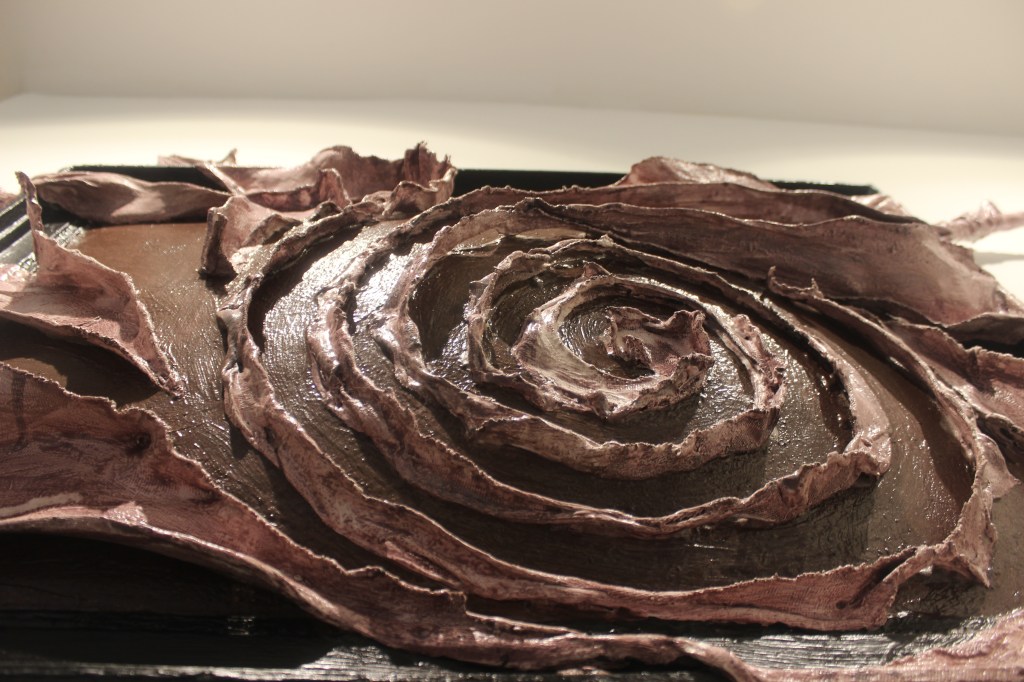
Limits and their perspective were presented here. The idea for this picture came from diving off Naxos in Greece. There were many underwater creatures that I saw there, but one particular moment stayed in my mind. An octopus revealed itself in the immediate vicinity and we looked at each other for what felt like 20 minutes. I didn’t swim closer to Him and He didn’t run away. We just looked at each other and for my part, at least, I had so much respect for the courage of this remarkable creature. This work of art has 8 arms and is the color of the octopus. The arm-like elements of the work extend beyond the frame and thus represent a symbol of the courage to overcome one’s own limitations.
Acrylic, latex, and epoxy resin on linen and fiberglass
H: 107 cm – W: 195 cm – D: 13 cm
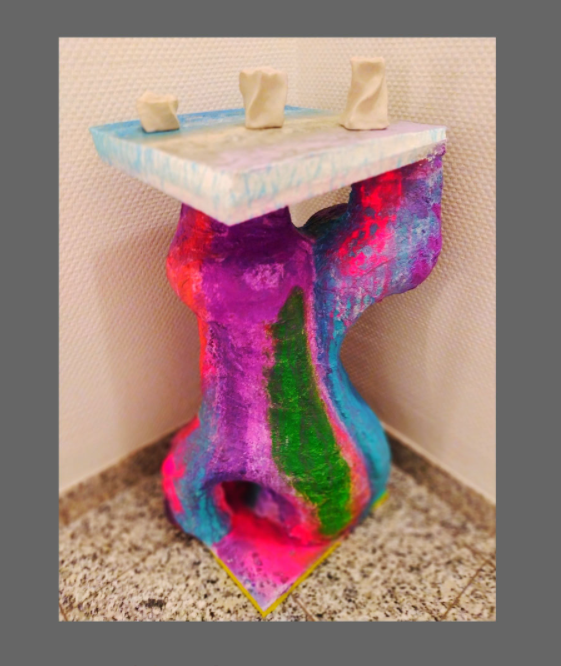
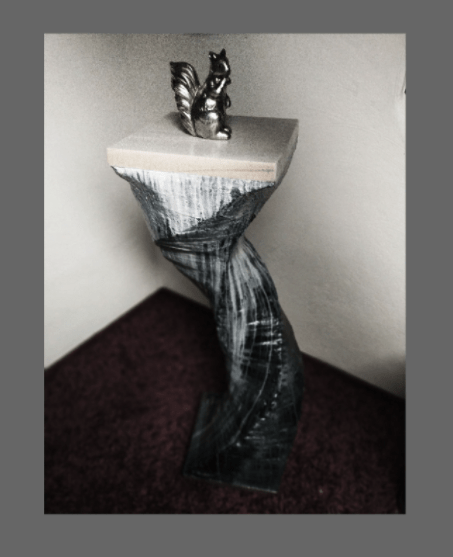
Colums (purchasable)
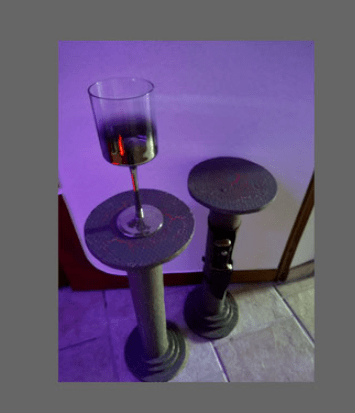
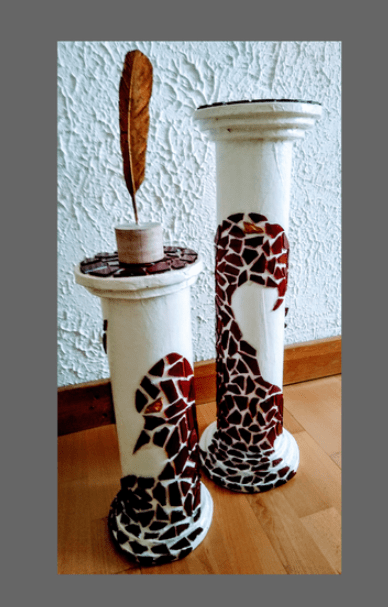
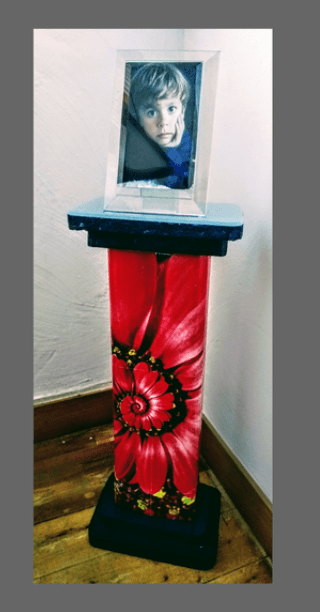
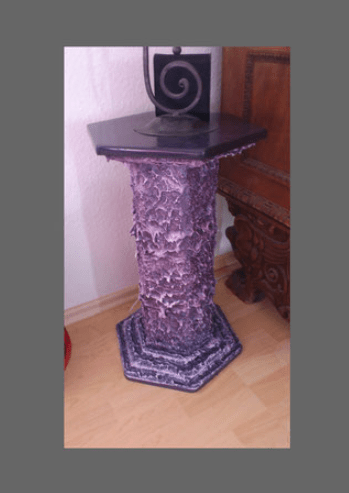

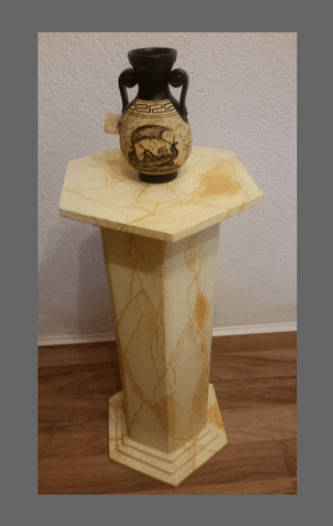
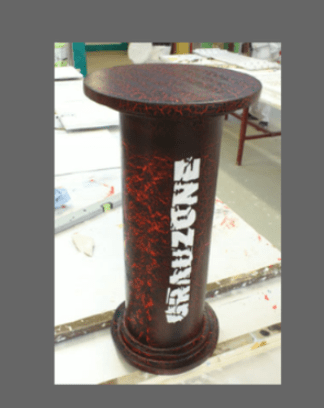
Colums (sold)
Green
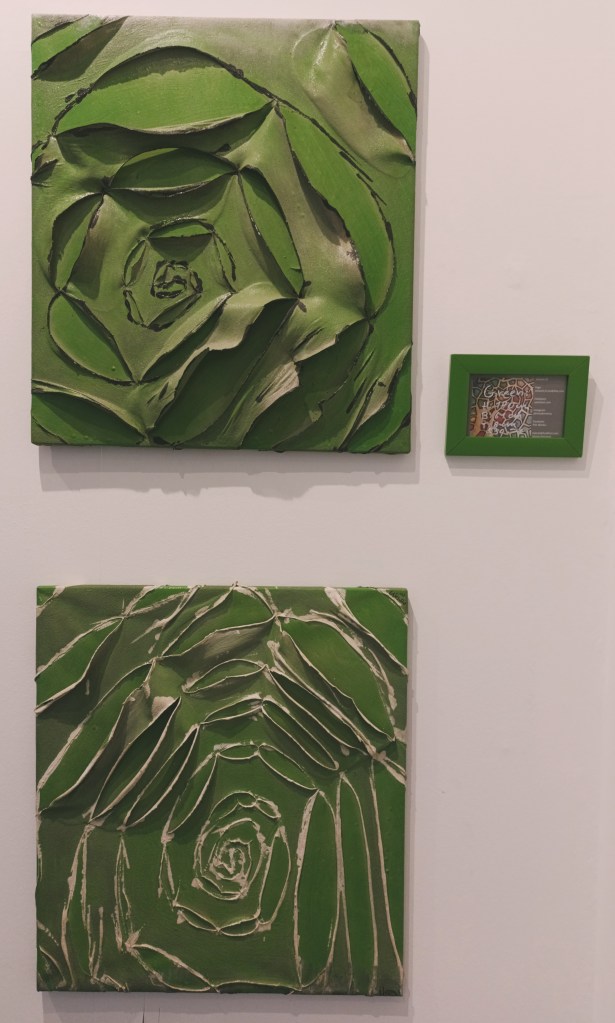
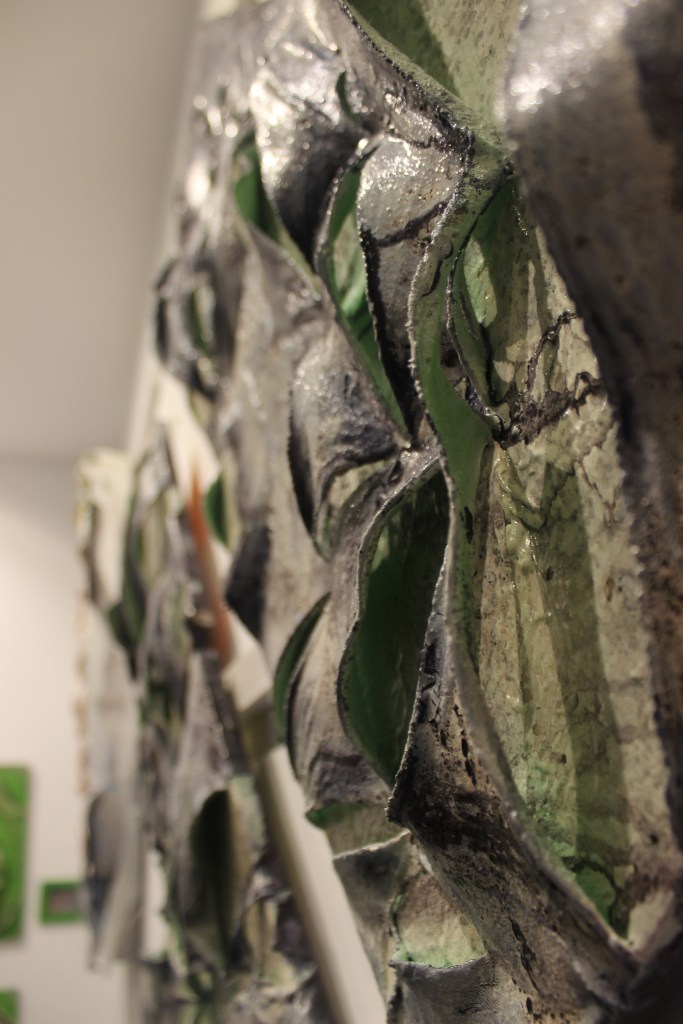
The first of these pictures was taken in a musty boiler room. At that time I was very interested in floral patterns and shapes and was enthusiastic about the statics of naturally growing plants. I wanted to know if you could vividly capture nature through your art. Coatings are used for aesthetics and protection. Paints, varnishes and glazes rarely take on static tasks. Accordingly, my art complements the existing knowledge about viscous coatings and implements a new type of depth both thematically and statically.
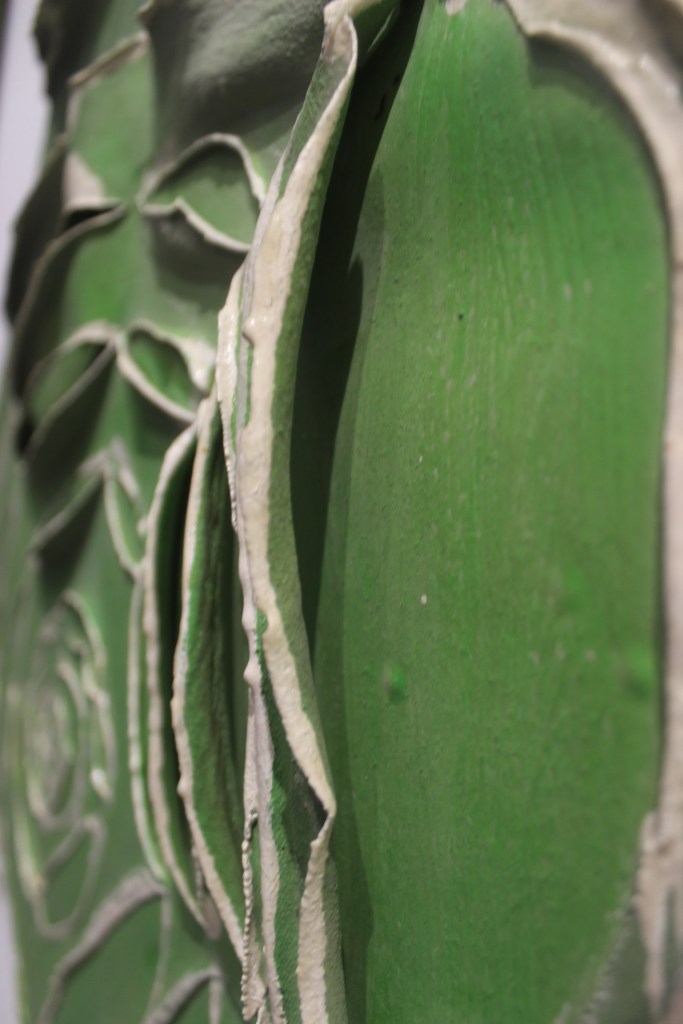
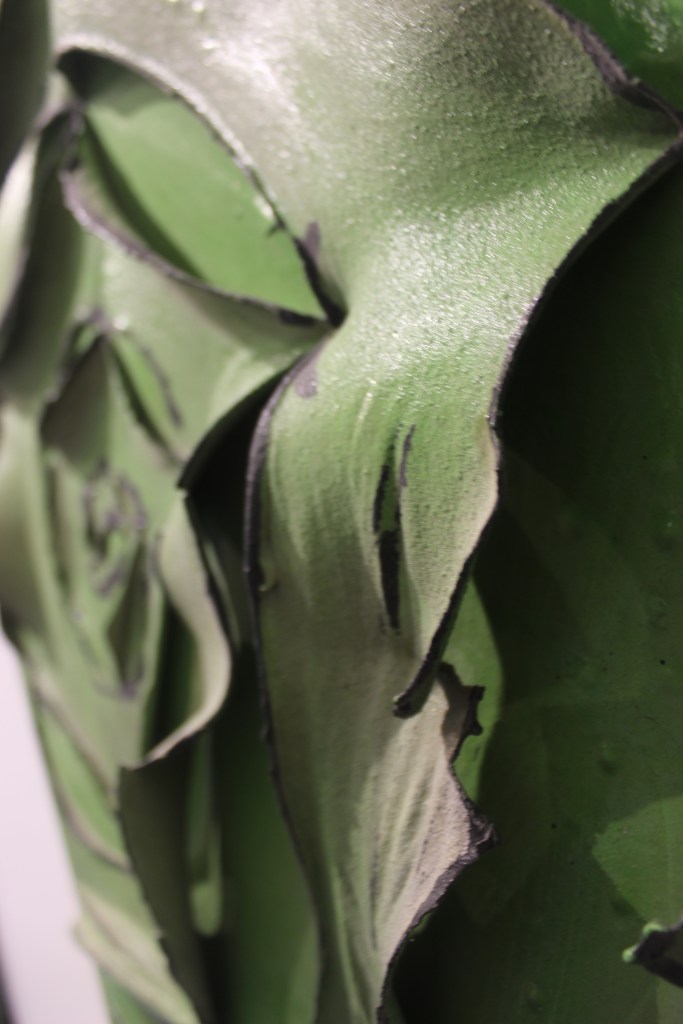
Alkyd resin and epoxy resin on linen.
H: 61 cm – W: 117 cm – D: 9 cm
Forgotten
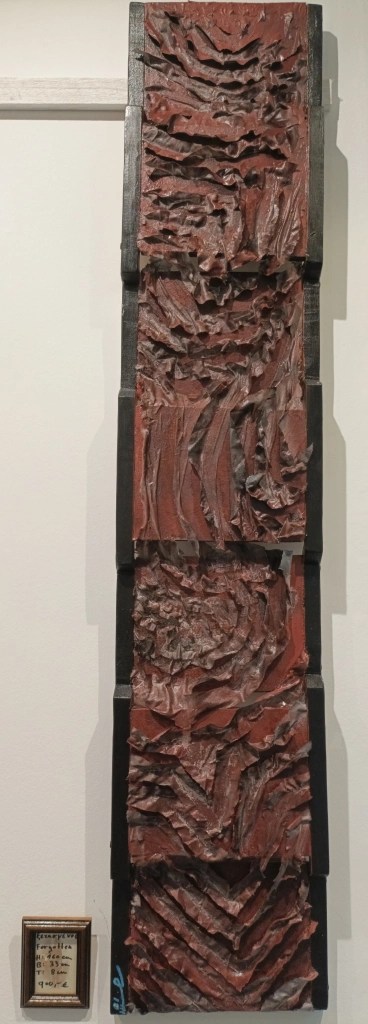
The principle of this picture represents the connection of several elements through the medium of color. With a variety of different components, the knowledge of complex connections is often hidden from our perception, so we lose sight of the “big picture”. In this work, several individual works of art were united into this „bigger whole“ through the connecting medium of color. The structures that blur on two levels also give the work a visual depth. I would like to point out that conscious and responsible actions can only come about through reflection on what connects us. One factor that connects all people is, for example, life on a planet – the preservation of which ultimately depends on the well-being of all of us and the well-being of future generations. The relief is made of satin and reflects the sensitivity of the connections just mentioned. The color scheme was based on the flow behavior of a viscous red liquid, which in turn reflects the explosiveness of the topic.
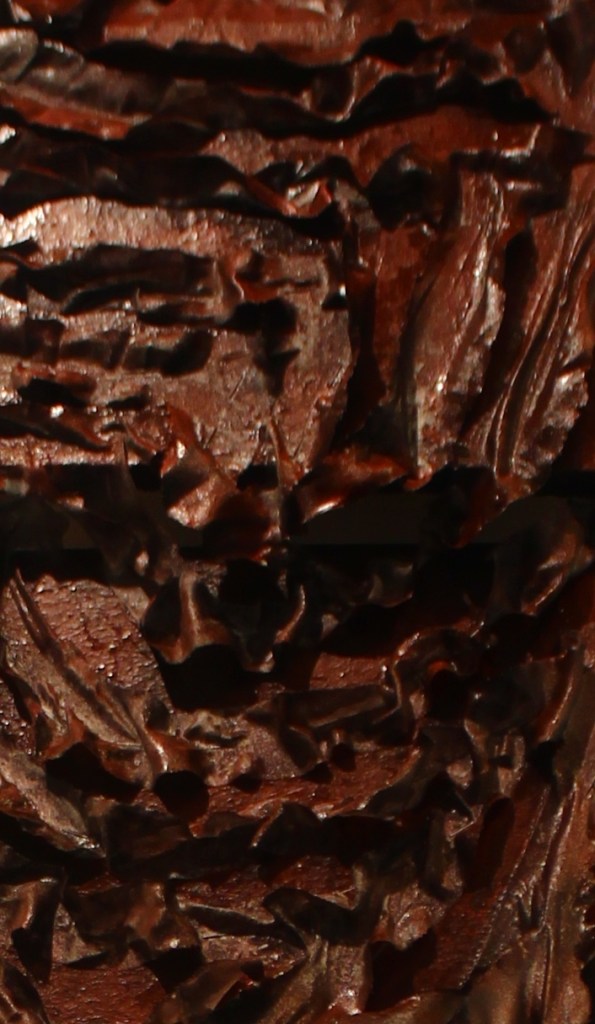

Multi-layered images on a frame construction, satin was incorporated into the acrylic paint application. Subsequent sealing with epoxy resin paint
H: 160 cm – W: 33 cm – D: 8 cm
THE Q
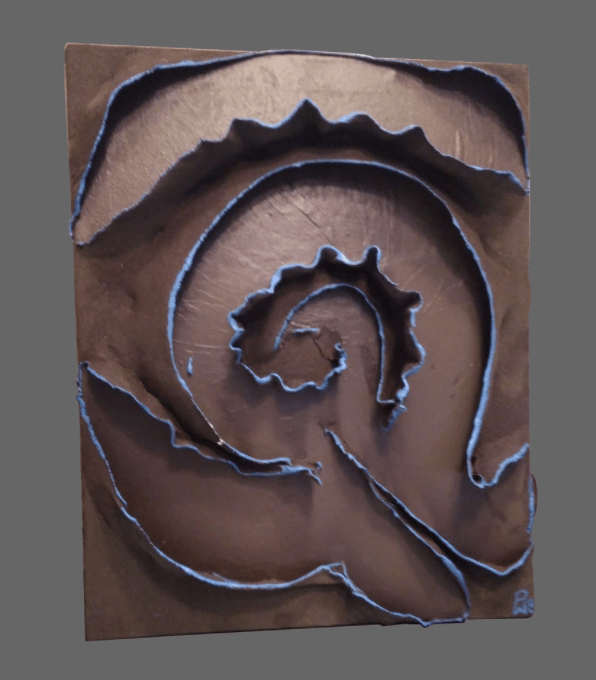
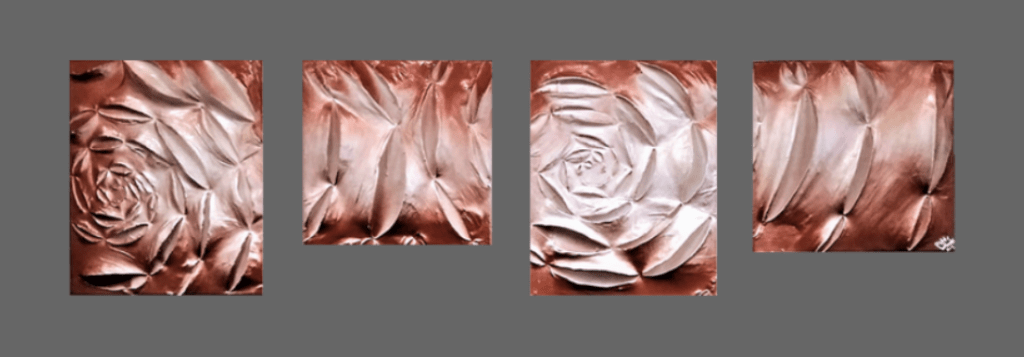
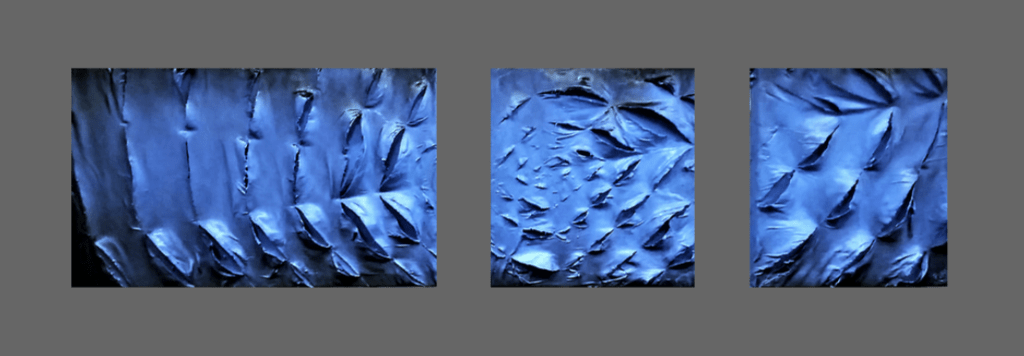
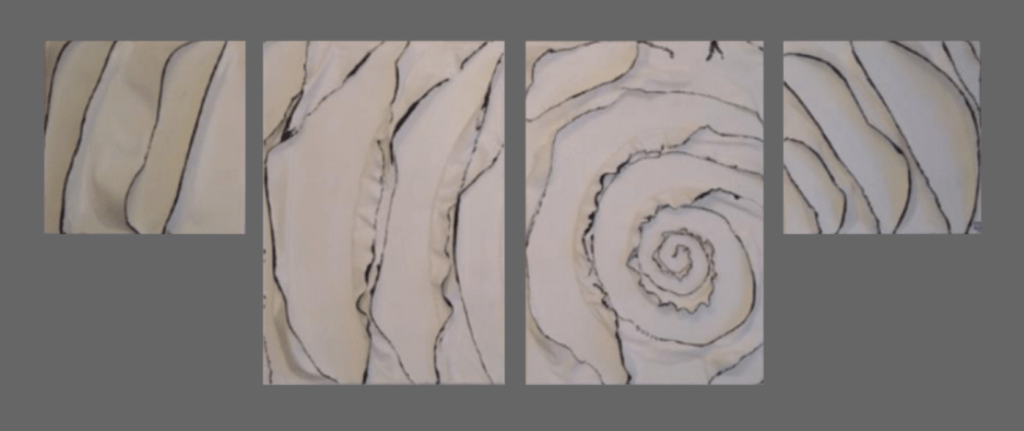
The letter Q should be hidden in this customer order. A good opportunity to draw attention to the symbol of the spiral. Unfortunately, images often only come into their own when viewed directly. In this work, blue glowing tips were incorporated to give the viewer the illusion of a lighting technique.
THE Q – H: 60 cm – W: 40 cm – D: 12 cm – sold
 Johnny Donnaray